


What Is SW110? A Practical E-Waste Guide for Malaysian Businesses
SW110 is a Malaysian scheduled waste classification covering waste from electrical and electronic assemblies containing specified hazardous components or contamination.
The official definition includes electrical and electronic assemblies containing components such as accumulators, mercury switches, certain types of glass or capacitors, or contamination involving substances such as cadmium, mercury, lead, nickel, chromium, copper and lithium.
For businesses, SW110 management is not simply about finding someone to remove old computers. It can involve waste classification, secure storage, data protection, inventory records, transportation and confirmation of the final recovery or disposal pathway.
This article provides general operational guidance. Organisations should confirm their specific classification and responsibilities with the Department of Environment or an appropriately qualified service provider.
Is Every Old Laptop Automatically SW110?
Not necessarily.
A functional device intended for genuine reuse, repair or refurbishment may be treated differently from equipment that has reached the end of its life and is being discarded as waste.
DOE guidance distinguishes used electrical and electronic equipment intended for direct reuse, repair or refurbishment from end-of-life e-waste. It recommends evaluating functionality and maintaining suitable documentation when equipment is intended to remain in use.
Businesses should therefore separate equipment into clear categories:
- Functional and suitable for direct reuse
- Repairable or refurbishable
- Suitable for parts recovery
- End-of-life and intended for disposal
- Data-bearing equipment requiring security processing
Calling every old laptop “recyclable waste” may result in reusable assets losing value. Treating damaged end-of-life equipment as ordinary second-hand stock can create a different set of environmental and data risks.
Common Business IT Equipment That Requires Assessment
Examples include:
- Laptops and desktop computers
- Servers and storage systems
- Hard drives and SSDs
- Network switches and routers
- Monitors and workstations
- Printers and multifunction devices
- Backup equipment
- Power supplies and UPS units
- Circuit boards and electronic components
- Mobile devices and tablets
- Cables and supporting electronics
The correct classification depends on the equipment’s condition, components and intended destination.
Business Responsibilities When Equipment Is Classified as Scheduled Waste
Malaysia’s Environmental Quality (Scheduled Wastes) Regulations 2005 set out responsibilities for waste generators.
Notify the Relevant Authority
Store the Waste Properly
Scheduled waste must be stored in compatible and durable containers that prevent leakage or release into the environment. Containers should remain closed except when waste is added or removed.
The regulations generally permit storage for up to 180 days, provided the accumulated quantity does not exceed 20 metric tonnes, unless written approval is obtained.
For IT assets, the appropriate storage method may differ from liquid or chemical waste, but the organisation must still prevent damage, uncontrolled access and environmental exposure.
Label the Storage Correctly
Containers must include information such as:
- Date of first generation
- Waste generator’s name
- Address
- Contact number
- Applicable scheduled waste code
- Required identification and warning labels
Maintain an Updated Inventory
Waste generators must keep an accurate inventory showing the categories and quantities generated, treated, disposed of or recovered. The regulations require these records to be retained for up to three years from the date the scheduled waste was generated.
Use the Correct Recovery or Disposal Pathway
Do Not Ignore the Data Inside E-Waste
A laptop may have little resale value while the information stored inside it remains highly sensitive.
Data-bearing equipment can contain:
- Customer records
- Employee information
- Financial documents
- Passwords and credentials
- Email archives
- Intellectual property
- Internal reports
- Business applications
- Network configurations
Data protection should happen before the equipment enters an uncontrolled recycling or downstream-processing environment.
Malaysia’s Personal Data Protection framework includes security and storage principles requiring organisations to protect personal data and avoid retaining it longer than necessary. Certain sector-specific codes also require permanent deletion of electronic personal data once the relevant disposal conditions have been met.
A Practical SW110 and E-Waste Disposal Process
Step 1: Build an Asset List
Record the equipment type, brand, model, serial number, asset number, condition and location.
Step 2: Separate Reusable and End-of-Life Equipment
Identify which assets may still support direct reuse, refurbishment, resale or parts recovery.
Step 3: Identify Data-Bearing Devices
Separate laptops, servers, storage drives, mobile devices and equipment containing embedded storage.
Step 4: Confirm the Waste Classification
Determine whether the equipment falls within SW110 or another applicable category. Obtain professional clarification where the classification is uncertain.
Step 5: Select the Data-Protection Method
Choose an appropriate wiping, sanitisation or physical-destruction pathway for each data-bearing device.
Step 6: Prepare the Collection
Confirm packaging, labelling, storage conditions, access procedures, collection records and destination details.
Step 7: Track the Final Outcome
Record whether each asset was reused, refurbished, recovered, recycled or disposed of.
Step 8: Retain the Documentation
Keep the records required for internal governance, environmental compliance, audits and ESG reporting.
Can Businesses Recover Value from Old Equipment?
Yes. Functional or repairable equipment may still have value through:
- Internal redeployment
- Refurbishment
- Resale
- Remarketing
- Component recovery
DOE guidance recognises direct reuse, reuse, repair and refurbishment as distinct pathways for used electrical and electronic equipment, subject to functionality and supporting documentation.
A proper assessment can reduce waste while helping the organisation recover value from assets that would otherwise be treated as scrap.
Manage E-Waste as an IT, Security and Compliance Project
SW110 management should involve more than the facilities department.
The project may require input from:
- IT
- Information security
- Facilities
- Environmental, health and safety
- Finance
- Procurement
- Legal or compliance
- Sustainability teams
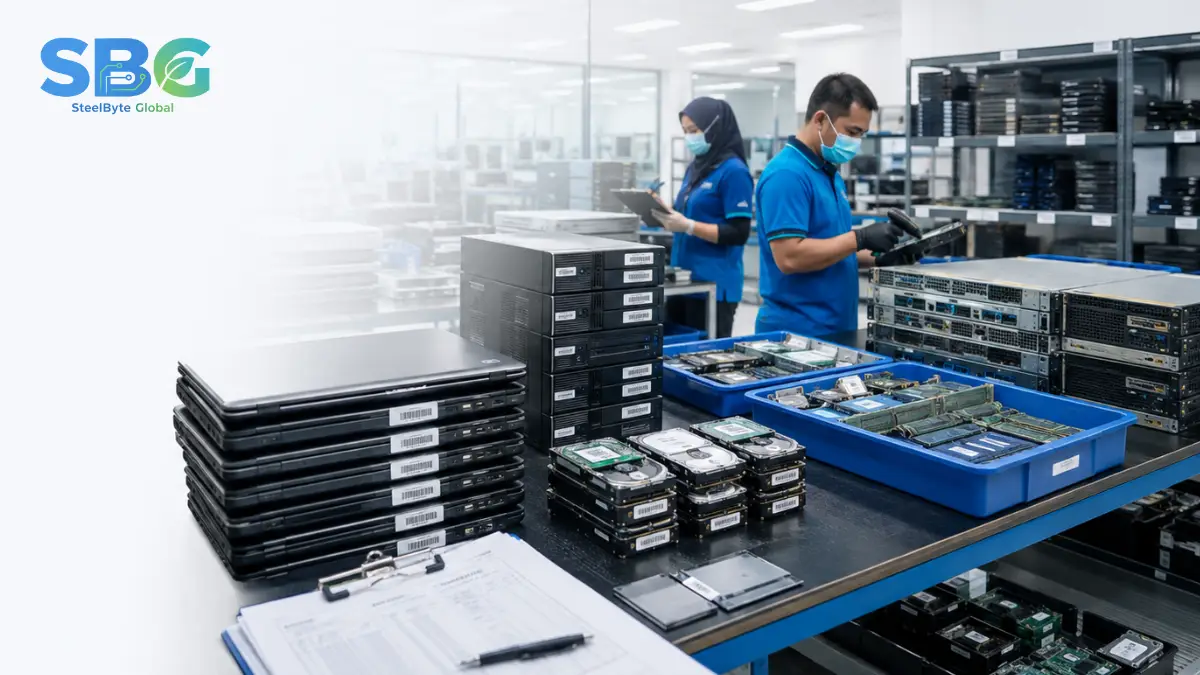
SteelByte Global supports organisations with e-waste collection planning, asset sorting, data protection, recycling, recovery and project documentation. Its current service model also evaluates suitable assets for refurbishment, reuse or value recovery rather than sending every device directly for disposal.
Frequently Asked Questions
SW110 is a scheduled waste code covering waste from electrical and electronic assemblies containing specified hazardous components or contamination. It is listed under Malaysia’s Environmental Quality (Scheduled Wastes) Regulations 2005.
End-of-life electronic equipment should first be assessed for reuse, refurbishment, data security and applicable waste classification. Equipment falling within SW110 must follow the relevant scheduled-waste requirements rather than general waste disposal.
The regulations generally allow a waste generator to store scheduled waste for up to 180 days, provided the on-site quantity does not exceed 20 metric tonnes, unless written approval is obtained.
Yes. Data-bearing devices should follow an approved sanitisation or destruction pathway before uncontrolled downstream handling. The organisation should retain records linking each device to its processing outcome.